
Blog
The Cost Behind Our Chocolate Bars

Over the past few months, many of you may have seen headlines about cocoa prices rising, falling and shifting again. Chocolate, it seems, is rarely out of the news.
And understandably, some of you have asked thoughtful questions. If prices ease, should chocolate cost less? If the industry is talking about resilience, what does that mean for a small independent chocolate company like ours?
I wanted to share our story, properly and personally. Because for us, Colombia was never a headline. It was, and still is a relationship.

You may have seen a recent BBC article about cocoa farmers in Ghana and Ivory Coast. If you haven’t, I’d encourage you to read it. It is not an easy read.
A Ghanaian farmer named Akosua Frimpong spoke about her husband falling ill. She had no money to take him to hospital. He died at home. That sentence has stayed with me.
Her story is not unusual right now. After cocoa prices surged dramatically in 2024, they have since crashed. Farmers who were promised a set price for their harvest are finding that the international market has moved on and left them behind. In Ghana and Ivory Coast alone, the payment crisis is thought to be affecting around 800,000 farming families.
I want to be honest with you about why this article matters to us here at Choc Affair, and why it’s not entirely separate from the choices we make every day as a family chocolate company.
Our cocoa comes from Colombia, not West Africa.
I want to be clear about that, because the situation described in the BBC piece is specific to Ghana and Ivory Coast, and the way their government boards set prices. Our relationship is with Luker Chocolate in Colombia, and that relationship works very differently.
But the underlying truth is the same wherever cocoa grows: behind every chocolate bar, there is a farming family. And whether they are paid fairly, treated well, and able to sustain their livelihoods. That is not a detail. That is the whole story.
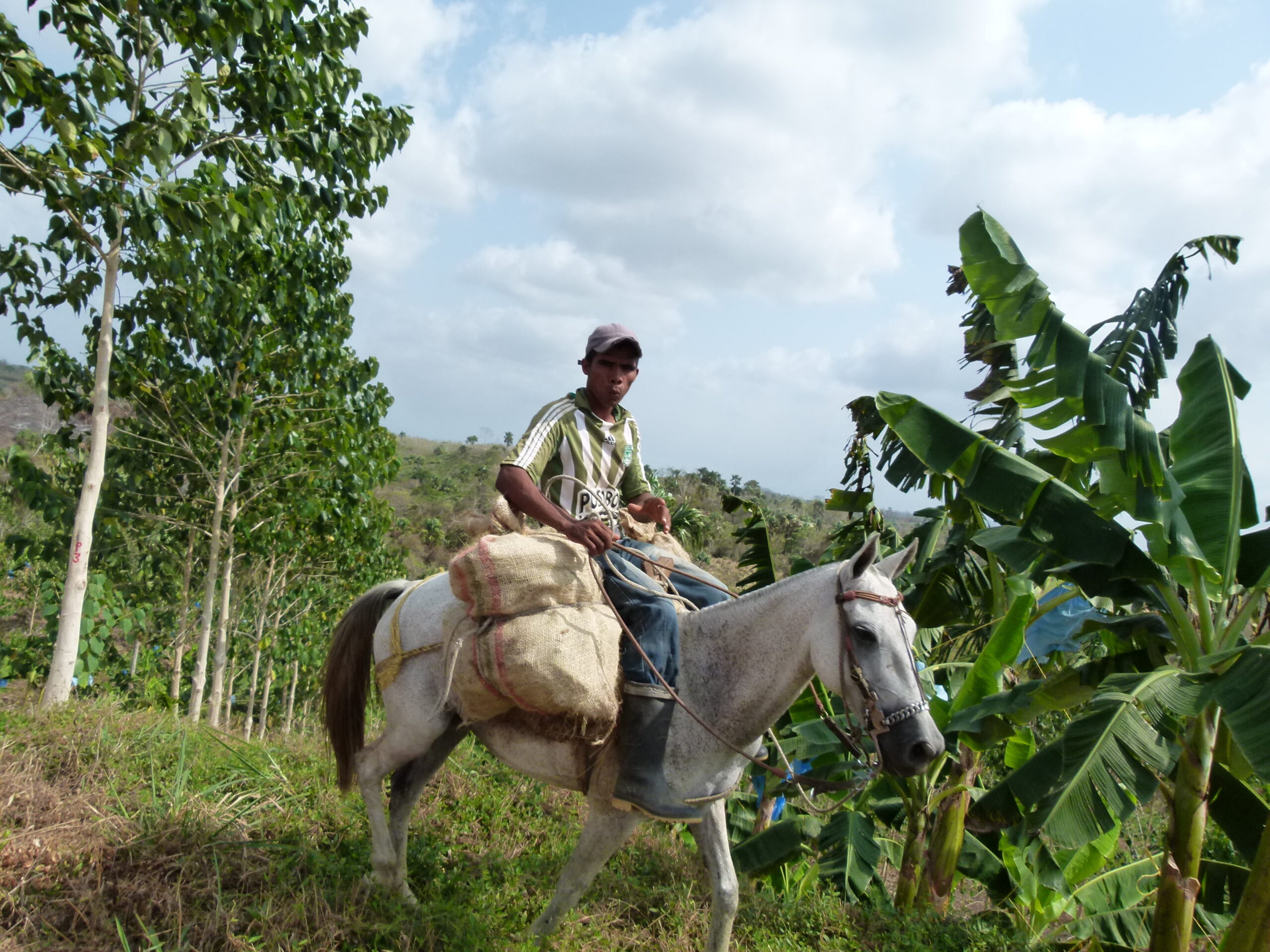
When I visited Colombia back in 2014 and stayed on the plantation itself, I sat outside early one morning with a cup of hot chocolate and my traditional Colombian arepa, watching farmers arrive for work. Some came on donkeys, some on motorbikes, some on foot. I remember thinking, this is where chocolate begins. Not in a factory. Not on a futures/stock exchange. Here, with these people.
That morning shaped everything that followed.

On pricing and why it’s never just about cocoa
The cocoa market is, by nature, changeable, in part due to global weather conditions affecting the harvests, but also because of the stock markets, where cocoa is bought and sold by those who often know little of the people behind this precious ingredient. Over the past two years it has been especially volatile: prices hit record highs in 2024, remained that way, and have only recently come back down sharply. I know some of you will be wondering: if cocoa is cheaper now, should your chocolate cost less?
It’s a completely fair question, and I want to answer it honestly.
Cocoa is our most important ingredient, but it is one cost among many. Over the same two years that cocoa prices were causing upheaval across the industry, our wages, energy costs, and print and packaging costs were also rising, and those don’t move in the same direction when a commodity price eases. We are a small, independent business. We don’t have the scale to absorb these pressures and simply reset overnight.
When cocoa prices spiked, we absorbed as much of that increase as we could rather than immediately passing it on. We made a deliberate choice not to shrink our bars or quietly adjust our recipes. If we make a 90g bar, it stays a 90g bar. But absorbing those costs has meant that, like many small businesses, we are still, genuinely, playing catch-up. A welcome fall in one input cost doesn’t wipe out two years of squeezed margins across the board.
“We absorbed costs where we could. We never changed our recipes. We never shrank our bars. And through all of it, we never once considered cutting our commitment to the people who grow our cocoa.”
What we chose not to cut
Throughout the most difficult period of the pricing crisis, at the exact moment when margins were at their tightest, there was one thing that was never on the table for discussion.
Since we began our relationship with Luker Chocolate, we have voluntarily contributed an additional 5% per kilo on every kilo of cocoa we purchase through their Chocolate Dream initiative. That money goes directly to the Chocokids programme, supporting leadership and education for young people in Colombia’s cocoa-growing communities. The aim of this initiative is to ignite a passion for cocoa growing amongst the young people, in the hope that they will choose cocoa over the inviting and ever so challenging drugs industry – Colombia is a country which has been torn apart by drugs and violence, and our supplier invest heavily to try to create something more appealing within these cocoa growing regions.
Without exception, including through the most difficult trading period the chocolate industry has seen in a generation, we have honoured that commitment in full. To date, that voluntary contribution amounts to over $120,000 paid into Colombia’s farming communities. Not because we were required to. Not because it was easy. Because it is the right thing to do.
We’ve also contributed approximately $10,500 through our partnership with rePurpose Global, funding the removal of plastic from the environment. Plastic that is transformed into eco-wood to build schools and homes in the very communities where our cocoa is grown.
Together, that is over $130,000 invested back into cocoa-growing communities. Not because we’ve had an easy few years, but in spite of the fact that we didn’t.
What we can do, and what we ask of you
We can’t fix the crisis in West Africa. But we can, and do, try to make sure that the cocoa behind our chocolate is sourced with genuine care and long-term commitment. During the course of these relationships we’ve supported reforestation in Necoclí, the construction of a local fermentation centre, and the provision of donkeys so children in remote areas can get to school.

None of that is a solution to a global market crisis, I know that. But it is our small, committed, personal way of saying: the people behind this incredible ingredient matter to us.
The next time you unwrap one of our bars or make yourself a mug of hot chocolate, I hope you’ll think for a moment about Akosua Frimpong, and the millions like her who grow the world’s cocoa. The best thing any of us can do is support chocolate companies who take these relationships seriously.
Thank you, as always, for choosing to be part of our story.
With love,
Linda x
